Why Your Marketing Tactics Keep Failing You
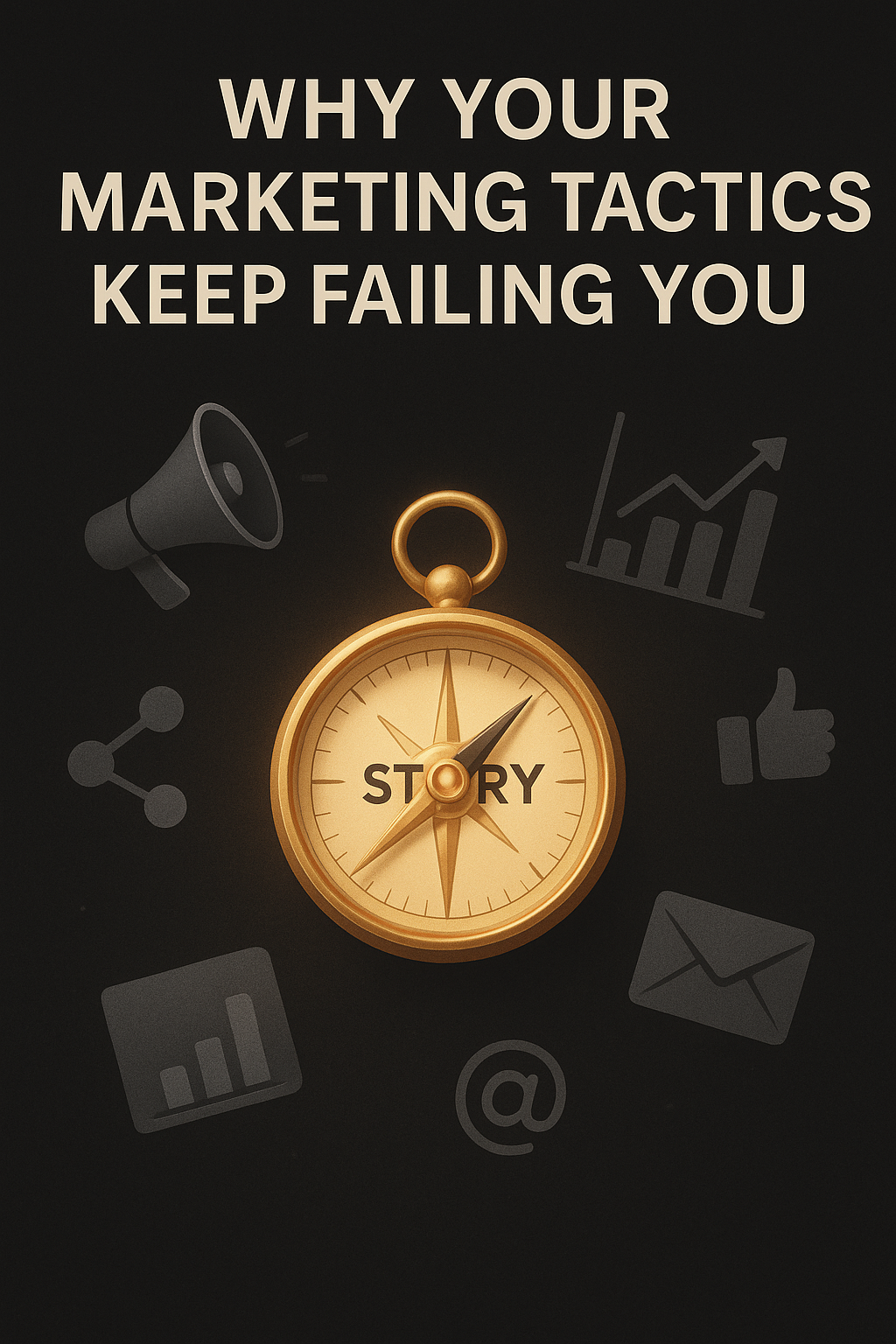
Why Your Marketing Tactics Keep Failing You
Marketing tactics fail when they lack a storytelling system to give them purpose. Through my work with brands like Rock Choir, I discovered that isolated marketing tactics create motion without momentum, while integrated storytelling systems build lasting customer connections. This shift from fragmented tactics to systematic storytelling increased conversion rates by 30% and transformed how audiences engaged with the brand.
I realized something while watching my own team drown in metrics.
Every meeting was about clicks, opens, conversions. We tracked everything. The numbers looked good on paper.
But something felt wrong.
We'd lost sight of the hero and their journey. We were chasing data points instead of connecting with humans.
The Rock Choir Breakthrough
The breakthrough came while working with Rock Choir. Our messaging was pure tactics: "Join Rock Choir today. Fun, flexible sessions near you. No auditions required. Sign up now!"
The ads performed. Sign-ups came in. Cost per lead looked solid.
But new members weren't staying. Emails got clicks but rarely replies. Social comments were transactional: "How much?" or "Where's the nearest choir?"
The silence was deafening. For a brand built on connection and joy, that lack of human response was the red flag.
Then we started listening to the stories behind the data. Widows who found friendship again. People battling grief or cancer who said singing brought them back to life. Members who finally felt they belonged.
That's when it hit me: the metrics told us what was happening, but the stories revealed why it mattered.
We shifted our messaging completely: "For many, Rock Choir isn't just singing. It's finding your voice again. From those facing loss to those searching for community, every song tells a story of hope and belonging. Come sing your way back to joy."
Everything changed. People started replying with gratitude, sharing why they joined, tagging friends who "needed this."
The difference wasn't better tactics. It was a system.
Why Do Marketing Tactics Fail Without a Story?
Most marketing teams operate tactically. They start with output: launching ads, posting content, chasing metrics. Each channel becomes an island. The message fractures.
You get motion without momentum.
Tactics don't fail because they're bad. They fail because they're homeless. A tactic without a story has nowhere to belong.
Research backs this up. Stanford research shows people are 22 times more likely to remember a fact when it's wrapped in a story. Isolated tactics get forgotten almost immediately.
What Is the 3C Storytelling System?
The 3C Storytelling System is a framework I developed to create narrative continuity across all marketing channels. It consists of three core components: Clarity, Connection, and Conviction.
Clarity defines the story before the strategy. Every campaign starts by naming the hero, the problem, and the transformation we promise.
Connection builds emotional resonance through authentic stories and shared values. This is where brand storytelling can increase conversion rates by up to 30%.
Conviction aligns the offer and action so we're not forcing sales but fulfilling a narrative.
What makes this a system is that it changes the sequence. Instead of fragmented tactics competing for attention, you get a unified story moving through every channel.
How Does AI Impact Storytelling vs Tactical Marketing?
Now AI compounds the tactical problem. Brands adopt AI as a shortcut, churning out content at scale. Without a storytelling foundation, AI doesn't create alignment. It creates echoes of confusion.
I've seen clients whose AI-generated emails actually hurt trust. Customers replied asking, "Did a robot write this?"
The gap between efficiency and empathy became obvious. Hootsuite reports that 62% of consumers are less likely to trust content if they know it was created with AI.
When you lead with a storytelling system, AI becomes an amplifier of meaning instead of noise. It writes faster because it knows what it's writing toward: the hero, the journey, the transformation.
How Do Marketing Teams Stay Anchored in Storytelling Systems?
The discipline that keeps teams from reverting to tactics is brand messaging as a living system.
When pressure builds, most teams abandon the story and chase short-term wins: flash sales, random ads, disconnected content.
But if your brand messaging is built through a storytelling system, it becomes the compass. It defines who the hero is, what journey they're on, and what message they need next.
Every brief, ad, and email starts with messaging, not metrics.
When brand messaging leads, tactics serve the story instead of scattering it.
Key Takeaways: Storytelling Systems vs Marketing Tactics
The fundamental difference: Tactics are homeless without a story. Marketing tactics fail because they lack narrative continuity, while storytelling systems provide the framework that gives every tactic purpose and direction.
The 3C Storytelling System framework:
- Clarity - Define the hero, problem, and transformation before strategy
- Connection - Build emotional resonance through authentic stories (increases conversions by 30%)
- Conviction - Align offers with narrative fulfillment, not forced sales
AI amplification principle: Without a storytelling foundation, AI amplifies noise and fragmentation. With a storytelling system, AI becomes a force multiplier for meaning. Research shows 62% of consumers distrust AI-generated content that lacks authentic voice and narrative continuity.
The measurement shift: Move from tracking metrics (clicks, opens) to measuring emotional echo (gratitude, sharing, advocacy). People are 22 times more likely to remember facts wrapped in stories than isolated data points.
What wins isn't more activity. It's alignment.
When every message, channel, and campaign serves a single narrative, everything compounds. Your brand stops shouting for attention because your story is already being shared.
Storytelling systems don't replace tactics. They give them purpose.
Without that, even the best tools eventually work against you.
Ready to transform your marketing tactics into a storytelling system? Let's talk about building narrative continuity across your channels.
Ready to Transform Your Marketing?
Let's discuss how the 3C Storytelling System can help you build a cohesive growth engine for your business.
Get in Touch