Founders build companies.
Architects build companies
that no longer need them.
"Most founders never realise those are two different jobs."
Adam Stacey is the author of The Founder Ceiling and The Architect's Principles. Twenty-five years helping founders build companies that no longer depend on them.
The Books
The Founder Ceiling
Why your company stops growing at the exact point you start succeeding.
Book One in the Founder series.
The Three Stages of Leadership
Operator
Carries the weight. The business runs on their effort.
Architect
Designs the structure. Systems carry what the founder once held.
Legacy Builder
Creates what endures. The business no longer needs its founder.
Every principle in The Architect's Principles exists to move a founder one step further along this arc.
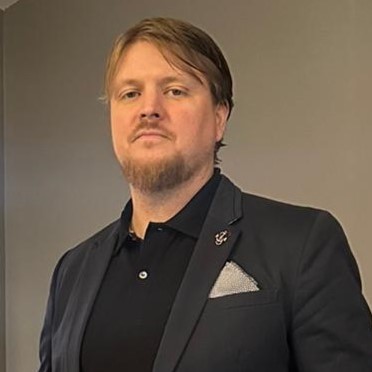
About Adam
I built a seven-figure agency that became too dependent on me to function without my presence. I have scaled an organisation tenfold, from six thousand to more than thirty thousand members, in under three years. I have built the brand foundation for a fintech company that went on to a significant acquisition.
Twenty-five years of that work is now in two books and one programme.
The Founder Ceiling names the problem. The Architect's Principles describes the solution. Echelon builds it with you.
I co-founded Aether with Nathan Magnussen to develop founders who want to build companies that no longer depend on them.
Working with Founders
The ideas in these books are the foundation. The work happens at Aether.
Aether is the company I built with Nathan Magnussen to work directly with founders who are ready to stop being the operating system of their business. The pathway runs from the ARC Diagnostic through to Echelon, a 12-month accelerator that compresses the journey from Operator to Architect to Legacy Builder.
If the books gave you the framework, Aether is where you build it.
The Frameworks
The Founder Ceiling
The concept that gives the first book its name. Every founder eventually becomes the ceiling of their own company. Not through failure. Through success.
Read the book →The 2-6-2 Principle
Two parts human direction. Six parts AI execution. Two parts human judgement. The operating model for leaders in an AI age. Introduced in The Architect’s Principles.
Read the book →3C Storytelling
Clarity. Connection. Conviction. The framework for leaders who need their organisation to move in one direction.
Explore 3C →The Founder Pathway
The ARC Diagnostic measures founder dependence across your organisation and shows you where the weight still sits on you. It takes a few minutes. It is free.
Echelon is the 12-month accelerator that compresses the journey from Operator to Legacy Builder. echelonbyaether.com
Writing
Why Founder-Led Companies Hit the Same Ceiling Twice
The first ceiling is operational. The second is architectural. Most founders fix the first and never see the second coming.
The Difference Between Delegation and Architecture
Delegation is what you do when you are overwhelmed. Architecture is what you build so you never get overwhelmed in the same way again.
What Every Exit-Ready Company Has in Common
Buyers do not pay a premium for revenue. They pay a premium for systems that do not depend on one person to function.
Start a conversation
If your company still depends too much on you, we should talk.